

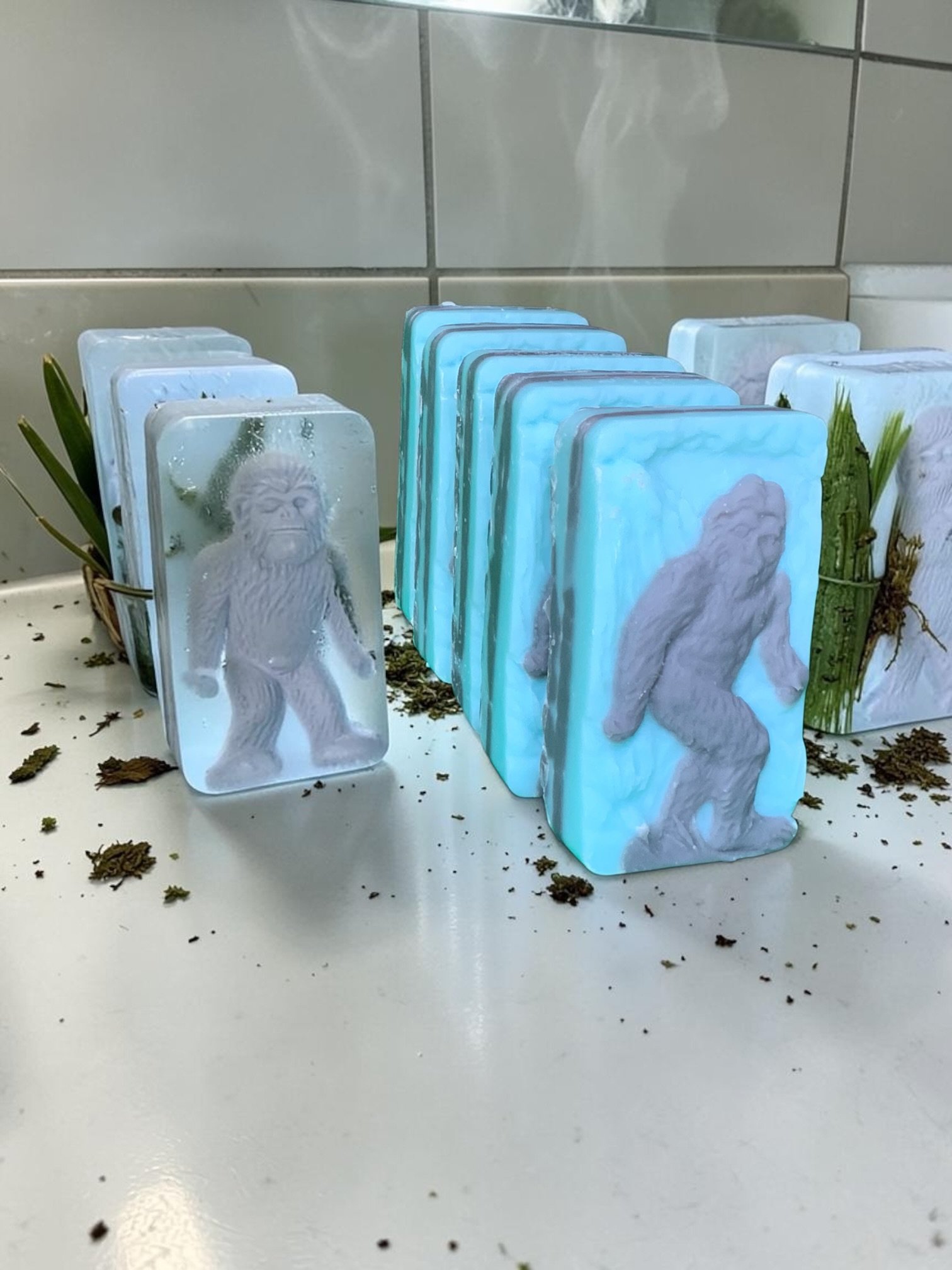


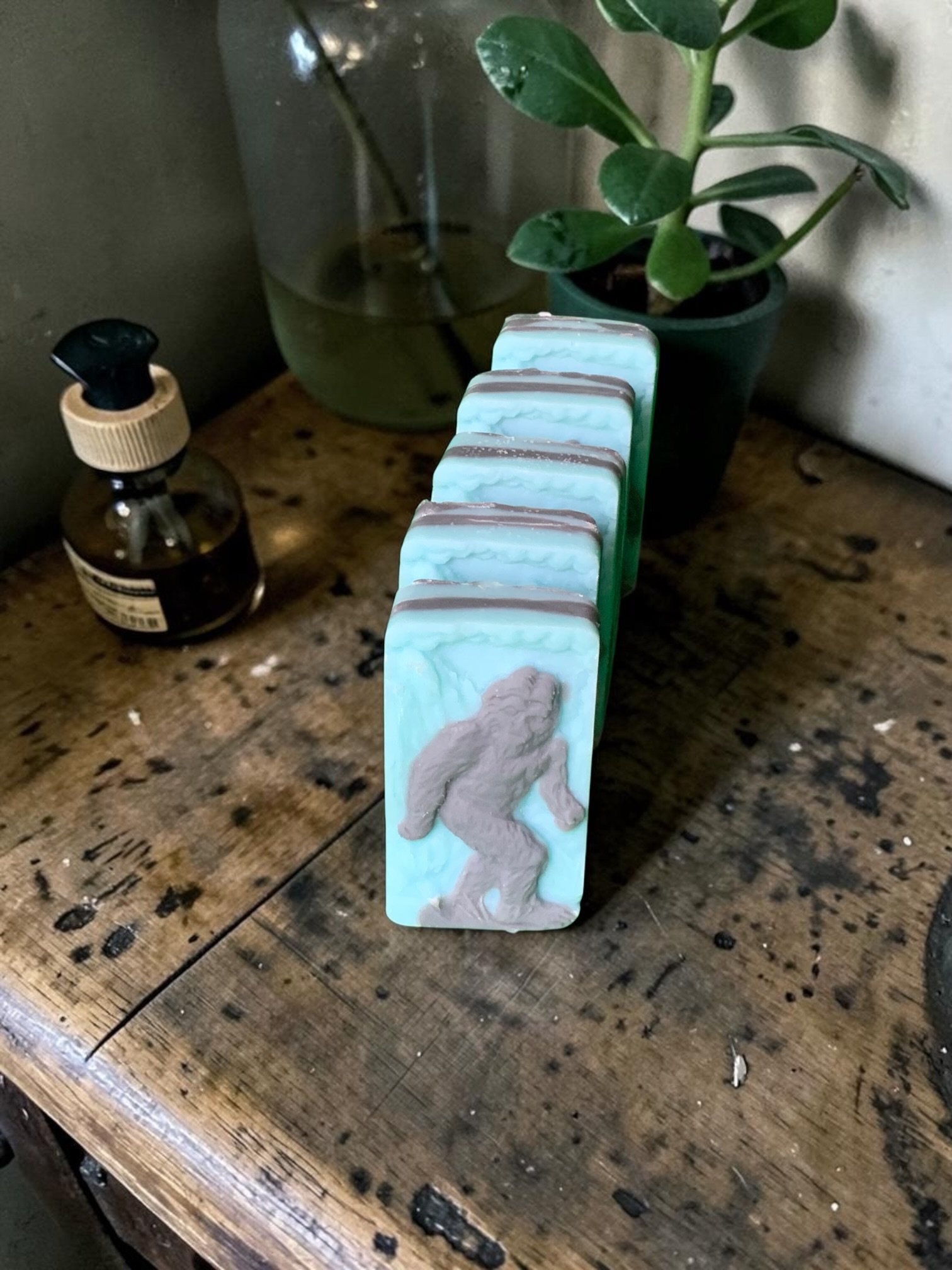
Dapper Squatch — Patchouli Vetiver Bar Soap
You didn't wake up this morning expecting to smell this good. And yet. Here we are.
🧔 Some legends are born. Others just found the right bar of soap.
The Dapper Squatch is built for the Squatch who has standards — earthy, confident, and deeply, unapologetically sophisticated. Real patchouli essential oil lays down a warm, sweet, woody base that unfurls slowly as the steam rises. Real vetiver essential oil threads in beneath it: smoky, grounding, complex, and deeply rooted in centuries of perfumery tradition. Together, they create a scent that is less "walked through a forest" and more "owns the forest, has a library in it, and takes very long showers." Your conditioning base of Organic Extra Virgin Coconut Oil, Pork Tallow, and Organic Castor Oil does the hard work: thick, creamy lather, naturally retained glycerin humectant, and skin that feels nourished — not squeaky-stripped — when you step out.
Why We Put It There:
-
Real Patchouli Essential Oil — Steam-distilled from Pogostemon cablin leaves, patchouli carries a rich, warm, botanical aroma with naturally occurring sesquiterpenes. Your nose will thank you. Your skin will feel the conditioning lather and also thank you.
-
Real Vetiver Essential Oil — Cold-pressed from vetiver roots (Chrysopogon zizanioides), this is one of the most complex and long-lasting base notes in natural perfumery. Smoky, earthy, grounding — and completely responsible for the head-turning.
-
Organic Extra Virgin Coconut Oil — High in lauric acid, produces a hard, long-lasting bar with a rich, bubbly lather that cleanses thoroughly without synthetic surfactants.
-
Pork Tallow — The fatty acid profile is remarkably similar to human skin's own lipid structure, making it unusually nourishing and gentle. Rich in Vitamins A, D, and E. Conditioning lather that plant oils have a hard time matching.
-
Organic Castor Oil — A natural humectant that draws moisture from the air, and the reason your lather is so dense and luxurious you'll stand in the shower longer than you planned.
-
Naturally Retained Glycerin — The saponification process generates glycerin, and unlike commercial manufacturers who extract and sell it separately, we leave every drop in the bar. That's what keeps your skin soft, not parched.
🌿 One bar. Two real essential oils. Zero pretending to be something it's not.
The Dapper Squatch is what happens when you stop settling for bars that smell like a department store cologne counter and start using something that smells like it came from the actual ground. These aren't synthetic fragrance approximations — patchouli and vetiver are genuine botanical essential oils with aromas that deepen and develop on warm skin. Lather up. Rinse. Smell genuinely remarkable for the rest of the day. You didn't plan to become a legend today, but the Dapper Squatch did not ask for your permission.
🌿 Ingredients
Every Seedsquatch bar is built on the same legendary foundation. Here's what each base ingredient actually does:
- Organic Extra Virgin Coconut Oil — Creates an exceptionally hard, long-lasting bar with a rich, bubbly lather. Its high lauric acid content gives it natural antibacterial and antimicrobial properties, deeply cleanses without synthetic surfactants, and helps maintain the skin's moisture barrier.
- Free Range Lard — The dark horse of soapmaking. Lard's fatty acid profile is remarkably similar to human skin's own lipid structure, making it uniquely nourishing and non-irritating. Rich in Vitamins A, D, and E from sun-raised pigs, it creates a creamy, conditioning lather that plant oils simply can't match.
- Organic Castor Oil — The secret weapon behind that cloud-like lather. Castor oil stabilizes and amplifies bubbles by up to 30%, making them denser and more luxurious. It's also a powerful humectant, drawing moisture from the air directly into your skin.
- Distilled Water — Clean water means no mineral interference with the saponification process, producing a consistent, pure bar every time.
- Food Grade Lye (Sodium Hydroxide) — Don't panic. Lye is how soap has been made for thousands of years. When it reacts with oils and fats through saponification, it transforms completely — zero lye remains in the finished bar. What's left behind is natural glycerin, which hydrates and softens your skin. Industrial soap manufacturers strip out that glycerin and sell it separately. Seedsquatch keeps it in.
- Essential Oil Blends — Pure plant-derived aromatic compounds that provide scent and therapeutic skin benefits specific to each bar. Listed per product below.
- Skin Safe Mica Powder — A naturally occurring mineral ground into fine powder, processed to remove any naturally occurring impurities, then used to create the color in each bar. It's in your eyeshadow, your blush, and your highlighter. Completely skin-safe, vegan, and cruelty-free.
☠️ WARNING
Most big‑brand soaps are less “gentle forest spring” and more “industrial degreaser in a party dress.” If the ingredient list reads like a failed chemistry quiz, that’s your first red flag and your cue to keep walking.
Sulfates
SLS,SLES, and their bubbly cousins with names that look like Wi‑Fi passwords. These detergents blast away dirt, but they also steamroll your skin’s natural oils, leaving you dry, itchy, and wondering why you suddenly shed like a lizard in witness protection. If your soap lathers like car‑wash fluid and your skin feels “squeaky,” that’s not “extra clean,” that’s barrier damage.
“fragrance” / “parfum”
These catch‑all words often hide phthalates and other additives tied to hormone disruption, allergies, and skin freak‑outs. If the scent could knock out a small village and the brand still won’t say what’s making it smell like “Arctic Thunderstorm Galaxy Sport,” treat it like a red flag in a bottle.
Parabens
These common preservatives are under fire for possible endocrine disruption, which is scientist for “might mess with the hormone orchestra that keeps you running like a functioning human.” If your soap is promising to last until the heat death of the universe, parabens may be helping it get there.
Formaldehyde‑releasing preservatives
Look out for DMDM hydantoin and other formaldehyde donors that trickle out small amounts of formaldehyde over the product’s shelf life. They keep microbes out, but they can also stir up contact dermatitis and allergic reactions in people sensitive to formaldehyde, which is not exactly the vibe you want from a relaxing shower. If your soap needs embalming‑adjacent chemistry to stay “fresh,” maybe it shouldn’t be on your skin in the first place.
Synthetic dyes
FD&C and D&C colorants (like Blue 1, Red 40, Yellow 5) add bright color and absolutely zero skin benefit. They’re there so the soap looks fun on a shelf, not so your skin feels great in real life, and they can be irritating for sensitive folks or kids. If your soap looks like a neon highlighter, remember: you’re washing your body, not customizing a sports car.
PEGs and “‑eth” ingredients
Ingredients ending in “‑eth” often go through a process that can leave behind contaminants like 1,4‑dioxane, which nobody invited to the shower. These show up as solvents, emulsifiers, and “feel enhancers,” but the baggage they bring has put them on many “maybe don’t bathe in this every day” lists. If it reads like a chemistry tongue‑twister and ends in “‑eth,” consider it a maybe‑not‑today situation.
Mineral oil and petrolatum
Mineral oil and petrolatum (petroleum jelly) are cheap, heavy occlusives often used to trap moisture — and everything else — under a shiny film. They’re also tied to environmental concerns, since they’re born from petroleum extraction and refining, which is not exactly Bigfoot‑approved. There are far better ways to moisturize than slathering yourself in a distant cousin of motor oil.